What is my skin type? How to find out in 2 minutes
Dry, oily, combination, normal or sensitive? Skin specialist Barbara Baars explains how to work out your skin type in two minutes with a clean face, a mirror and a tissue, and what the result means for your skincare.
 By Barbara Baars
6 min read

In this article

Short answer: the easiest way to find your skin type is with a clean face. Wash your face with lukewarm water and a mild cleanser, pat it dry and apply nothing. Look and feel after an hour or two. If your skin feels tight all over, you probably have dry skin. If your whole face is shiny, oily skin. If only your T-zone shines and your cheeks feel dry, combination skin. If everything feels comfortable, normal skin. And if your skin stings or turns red easily, it is also sensitive.
From this article
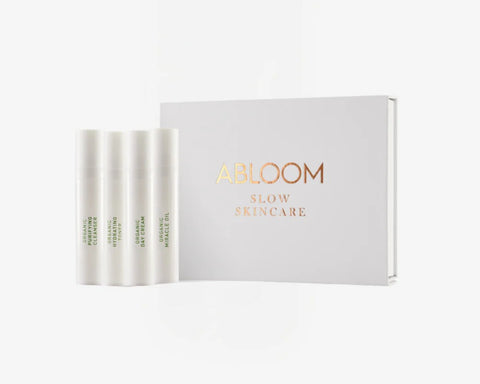
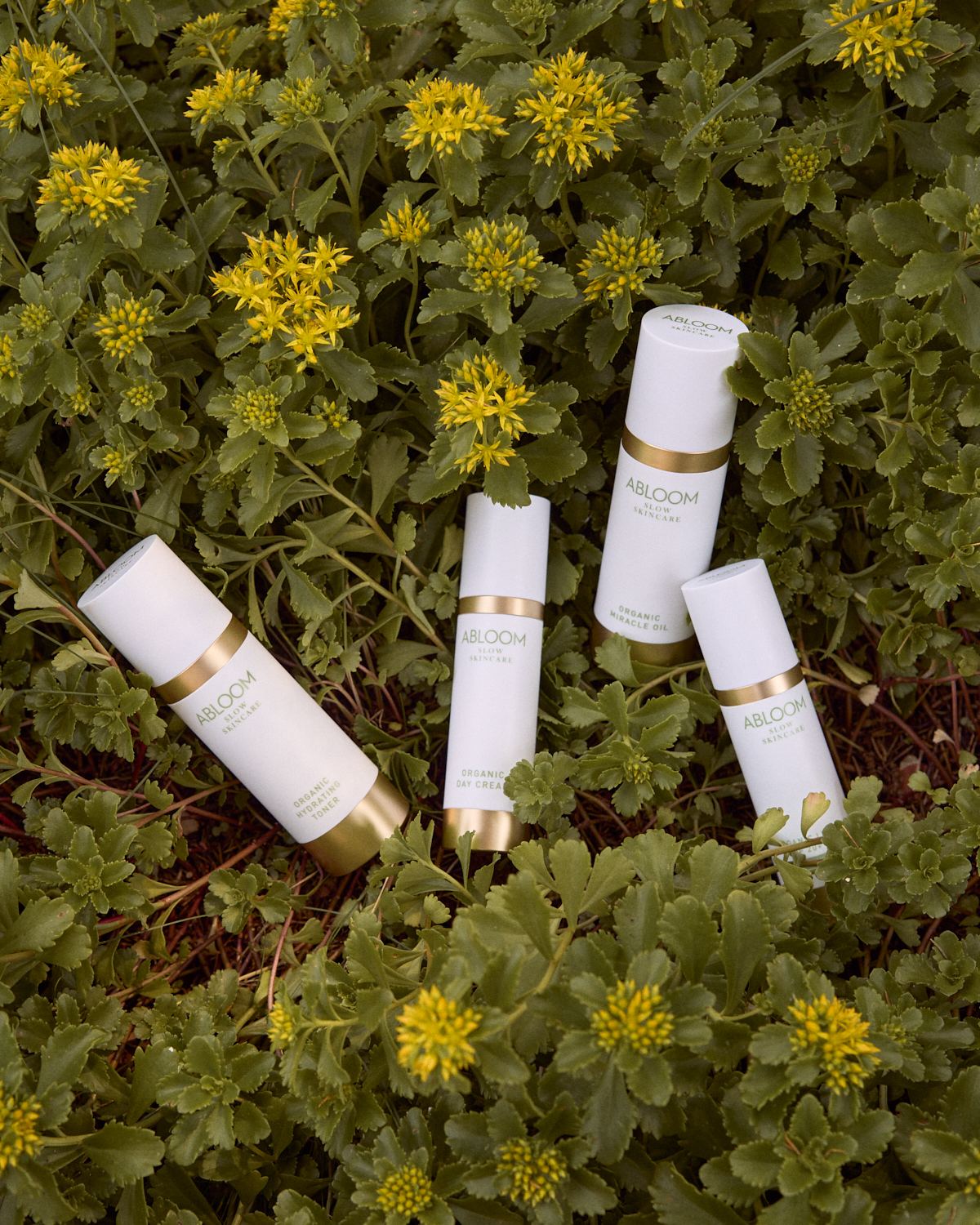
Discover Abloom with our four bestsellers in mini sizes. The complete basic routine to find out what your skin loves.
"I honestly don't know what my skin type is." I hear that a lot in the salon, and I understand. One day your skin feels dry, the next day your nose is shiny. Still, it is worth finding out, because your skin type decides which care feels comfortable and which doesn't. In this guide I show you how to find your skin type in two minutes, what the result means and where to read on.
How to find your skin type in 2 minutes
The looking and feeling takes two minutes. The waiting beforehand you simply do while getting on with your day.
- Cleanse your face. Use lukewarm water and a mild cleanser. No scrub and no hot water: they make your skin temporarily redder or drier than it is.
- Pat dry and apply nothing. No toner, cream, oil or make-up. You want to see what your skin does on its own.
- Wait an hour or two. Your skin needs some time to produce its own sebum.
- Look in the mirror in daylight. Where does your skin shine? On your forehead, nose and chin (the T-zone), on your cheeks too, or nowhere?
- Do the tissue test. Press a clean tissue onto your forehead, nose, chin and cheeks for a few seconds. Oily marks show where your skin produces sebum.
- Feel. Does your skin feel tight, rough or comfortable? Does anything sting or tingle?
This is exactly the question we ask in our skincare test: how does your skin usually feel a few hours after cleansing?
What do you see? How to read the result
| What you see and feel | Your skin type |
|---|---|
| Tight and dry all over, the tissue stays clean | Dry skin |
| Oily or shiny, on the T-zone and on your cheeks too | Oily skin |
| Dry in places, oily in the T-zone | Combination skin |
| Comfortable and balanced | Normal skin |
| Reacts easily: stings or turns red | Sensitive skin, possible with any skin type |
Dry skin
Your skin feels tight after washing and quickly turns rough or flaky, especially in cold weather and with the heating on. The tissue shows little or nothing. Dry skin makes little sebum of its own and asks for a mild cleanser, moisture layer by layer and a rich cream or oil. Read on: dry skin care.
Oily skin
Your skin shines quickly, mainly on your forehead, nose and chin, but often on your cheeks too. The tissue shows marks from almost your whole face, and pores clog easily. Stripping the oil usually makes it worse. A mild routine with light nourishment suits it better. Read on: oily skin care. Do you also have spots or inflammation? Then have a look at acne skin.
Combination skin
Your T-zone shines while your cheeks feel dry or tight. The tissue is oily at your nose and forehead and clean at your cheeks. You use one gentle routine for your whole face and only adjust how much you apply per area. Read on: combination skin care.
Normal skin
Your skin feels comfortable, not tight and not oily. The tissue shows at most a small mark from your nose. Normal skin is well balanced, but balanced does not mean maintenance-free: even normal skin needs a good routine to stay that way. Read on: normal skin care.
Sensitive skin
Does your skin sting, feel tight or turn red easily, from wind, warmth, sun or a new product? Then your skin is sensitive. That is not really a separate skin type, but a quality that can go with any type: you can have dry and sensitive skin, or oily skin that reacts quickly. Read on: sensitive skin. Does your skin turn red often and for a long time, even without a clear reason, or do you see small red veins? Then also read about rosacea skin and, if in doubt, ask your GP or dermatologist to take a look.
Still in doubt? Watch out for this
- Don't look straight after a shower. Warm water makes your skin temporarily red and tight.
- Don't look with cream or make-up on. Then you see your product, not your skin.
- Don't look after exercise. Sweat looks like shine.
- Look on a few different days. One check says little. If the result matches two or three times, you can be fairly sure.
- Somewhere in between? Choose the skin type that most closely matches what bothers you most often. That is usually the easiest place to start your skincare too.
Dry or dehydrated?
Dry skin and dehydrated skin look alike, but they are not the same. Dry skin makes too little sebum; that is a skin type. Dehydrated skin lacks water; that is a temporary state that can happen with any skin type, even oily skin. Is your skin shiny but still feels tight, or do you see fine dryness lines? Then it may be dehydrated. How to recognise it, you can read in dehydrated skin: how to recognise it and care for it.
Your skin type can change
Your skin type is not fixed. Hormones, the season, your age and your skincare all affect it. In winter, with the cold outside and the heating on, almost every skin feels drier. During puberty and around your period, skin often makes more sebum. And over the years skin usually becomes drier and thinner; read more about mature skin. Men's skin is different too: thicker and often a little oilier, see men's skin.
That is why I would rather look at how your skin feels now than at a label for life. How dry, oily or combination skin develops and how to bring it back into balance, you can read in dry, oily or combination skin? Here is how it really works.
From skin type to routine
Know your skin type? Then you also know what your skincare should focus on. On every skin type page you can read how to care for that skin and which products suit it. How to build a calm routine in three steps, you can see in our skincare routine. And in which order to use your products, you can read in skincare order.
Still not sure?
Then our free skincare test will help you further. You answer five short questions: what you would like to improve in your skin, how your skin feels after cleansing, how it reacts to the sun, your age and how many steps you want. You then get one matching trial routine for 10 to 14 days and a routine for morning and evening.
In short
- Cleanse gently, apply nothing and look after an hour or two.
- Tight all over is dry, shine all over is oily, shine only in the T-zone is combination, comfortable is normal.
- Sensitive is not a separate type: it can go with any skin.
- Dry is not the same as dehydrated.
- Your skin type can change with the season, hormones and age.
Read also
- Skin types and concerns
- Dry, oily or combination skin? Here is how it really works
- Dehydrated skin: how to recognise it and care for it
- In what order do you use your skincare?
Love,
Barbara Baars
Skin Specialist
Frequently asked questions
Can your skin type change?
How do I know if I have sensitive skin?
What is the difference between dry and dehydrated skin?
How long should I wait after washing to find my skin type?

About the author
More about Barbara BaarsNot sure what your skin needs?
Take the free skin test and find the routine that suits your skin.