Why the INCI list is only the beginning of conscious skincare
 By Barbara Baars
7 min read

In this article
- 1. What is an INCI list?
- 2. How does the order on the INCI list work?
- 3. Why 0.001% is enough for a big story
- 4. Ingredients you often come across (and what you should know about them)
- 5. Parfum on the INCI list: a reason for concern?
- 6. Alcohol in skincare: enemy or helper?
- 7. Clean beauty ≠ organic
- 8. Having AI analyse an INCI list? Think twice
- 9. Want to check ingredients yourself? These tools help
- 10. Top 5 hormone disruptors
- 11. Conclusion: the INCI list is the beginning, not the end
- Summary

1. What is an INCI list?
Clean beauty is growing fast in popularity. And rightly so: we want to be more and more conscious about what we put on our skin. Many people start their search with the INCI list, the official ingredient list on a cosmetic product. A good starting point, but certainly not the end point. Because what you see on this list, and above all what you don't see, often says more than you think.
INCI stands for International Nomenclature of Cosmetic Ingredients. It is a standardised system that lists ingredients on product packaging in the same way all over the world.
The list is meant to provide transparency, and to a certain extent it does. But to read it properly, you need to know how it works.
2. How does the order on the INCI list work?
The basic rules at a glance:
- Ingredients above 1% must be listed in descending order of concentration.
- Ingredients below 1% may be listed in any order (unless they are colourants).
- In leave-on products, every ingredient from 0.001% upwards must be listed.
- In rinse-off products, the threshold is 0.01%.
So the order looks transparent, but it leaves room for interpretation, and for marketing. Ingredients below 1% can be placed in any order. This means an ingredient present in only a negligible amount can easily end up on the third line of the INCI list.


3. Why 0.001% is enough for a big story
This is where it gets interesting. A brand can list a so-called hero ingredient (such as an exotic herb or a popular active) on the INCI list, even if the product contains only 0.001% of it.
As long as it meets the labelling requirement for leave-on products, it may be included. And that is enough for a whole campaign: “With [x] extract”, “enriched with [y]”, without making clear how much is in it, or what it really contributes to skin health.
The result: a powerful story built on a tiny amount. And that is exactly where marketing and transparency pull in different directions.
4. Ingredients you often come across (and what you should know about them)
So it pays to look beyond the packaging. Here are some common ingredients you will find on an INCI list, and what you really need to know about them:
- Aqua: often the first ingredient. It does nothing for the skin and mainly works as a filler.
- Paraffinum Liquidum: also known as mineral oil, petroleum jelly or liquid paraffin. It seals the skin, disrupts the microbiome and blocks the absorption of active substances.
- Alcohol Denat: a denatured alcohol that is often synthetic. It can be drying and irritating.
- PEGs: synthetic emulsifiers or solvents. Sometimes problematic for the skin barrier.
- Parfum: a broad term. It can be a synthetic fragrance blend as well as a carefully composed mix of essential oils.
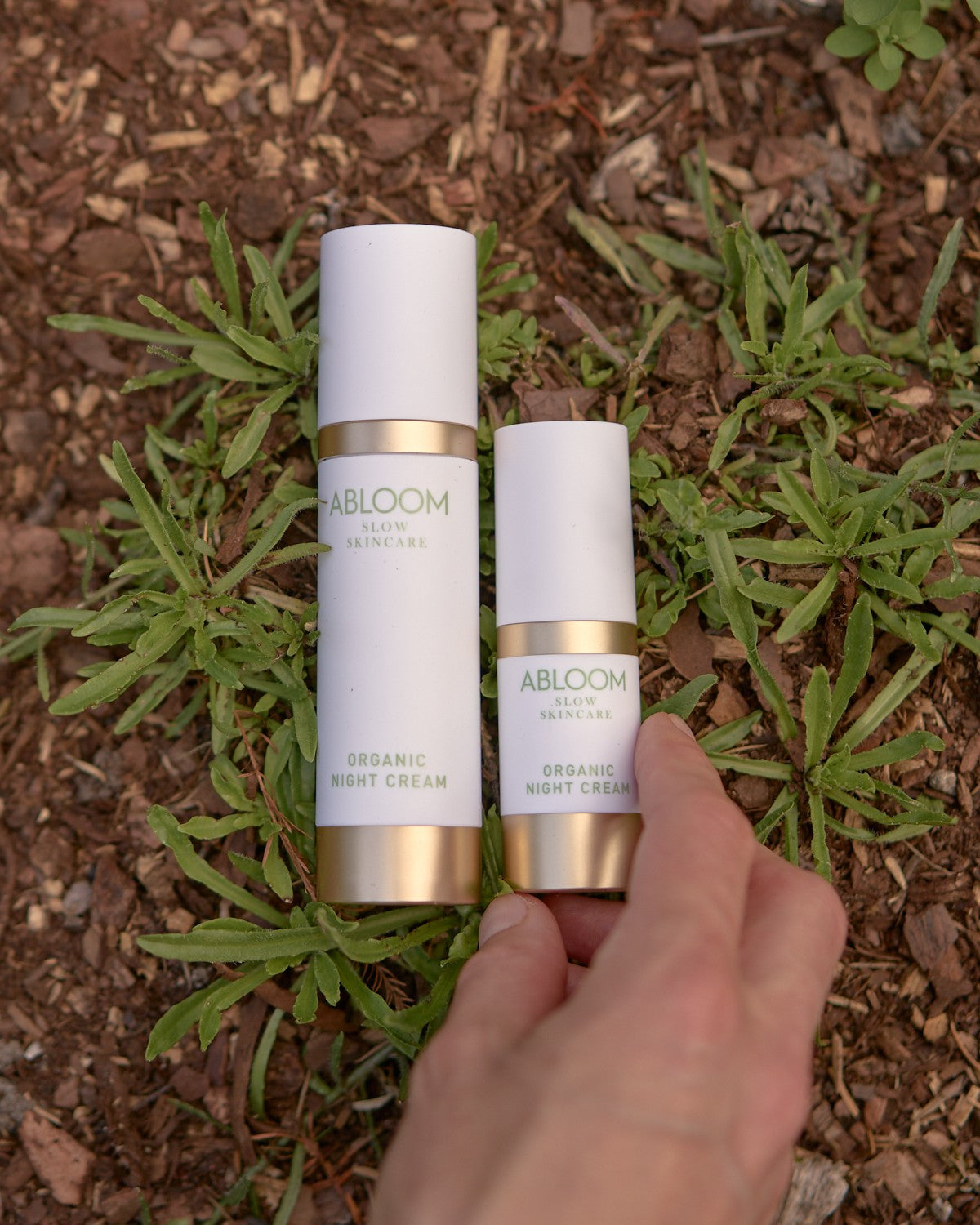
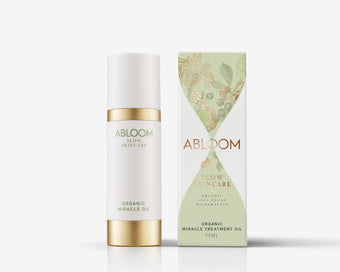
Instead of aqua (water), Abloom Skincare uses organic aloe vera, and instead of mineral oil (paraffinum liquidum) we add organic cold-pressed oils.
5. Parfum on the INCI list: a reason for concern?
The term “parfum” often raises suspicion. That is understandable, because it is a collective name without any specification. What exactly hides behind it differs from brand to brand.
So parfum is not ‘bad’ by definition. It all depends on origin, composition and dosage. Synthetic fragrances can indeed irritate. But a well-composed blend of essential oils is also listed as Parfum, and it can actually support the skin. Think of lavender (calming), myrrh (restoring) or frankincense (cell-renewing).
If in doubt, always ask. Serious brands can explain what their parfum contains, and why they use it.
6. Alcohol in skincare: enemy or helper?
Alcohol has a bad reputation, and partly for good reason. Alcohol Denat or Isopropyl Alcohol can disrupt the skin barrier and dry the skin out.
But: not all alcohol is the same. There are also organic alcohols made through fermentation, for example from sugar cane or grain, which play a supporting role in low doses.
A good formulation can use alcohol as:
- An extraction agent for plants and resins (some bioactive substances can only be extracted with alcohol, as with resins)
- Natural preservation
- A way to improve the absorption of active substances
Whether alcohol is ‘good’ or ‘bad’ depends entirely on context, concentration and origin.
7. Clean beauty ≠ organic
The term “clean beauty” sounds safe, pure and responsible. But there is one problem: it is not a protected term. Any brand may use it, even if the product contains synthetic fragrances, silicones or microplastics.
So clean does not always mean natural or organic.
An honest brand tells you not only what is in a product, but also why. Transparency about sourcing, processing and dosage is essential.
Read more about the real plant power of Abloom
8. Having AI analyse an INCI list? Think twice
There is a growing trend of influencers and consumers entering a product (or a single INCI list) into AI tools or apps such as ChatGPT, with the question: "Is this good for my skin?"
Be careful: an AI does know what is in it, but not:
- In what dosage
- How it has been processed
- How the substances interact
- What the effect is on your unique skin type
A natural extract can look great on paper but do nothing in a negligible concentration. On the other hand, acids or alcohols can be functional and safe, provided they are well formulated.
Without context, it remains a theoretical judgement.
9. Want to check ingredients yourself? These tools help
Want to do your own research? There are a few reliable platforms, such as:
- INCI Beauty (handy app)
- CodeCheck
- CosDNA (www.cosdna.com)
These tools show what an ingredient is, what it does and how it is rated. You can scan products or look up ingredients from a published INCI list.
Keep in mind: they analyse individual ingredients, separate from the complete formulation. See them as a handy aid, not a final verdict.
10. Top 5 hormone disruptors
The top 5 most common hormone-disrupting substances (also called "endocrine disruptors") that you often find in shampoo, toothpaste and creams:
1. Parabens (such as methylparaben, propylparaben)
- Where you find them: widely used in shampoos, creams, lotions and deodorants.
- Why harmful: parabens mimic oestrogen, which can disrupt the natural hormone balance. There are concerns about possible links with breast cancer and fertility problems.
- How to avoid them: look for labels such as “paraben-free” or check the INCI list for names ending in “-paraben”.
2. Triclosan
- Where you find it: toothpastes, antibacterial soaps, some deodorants.
- Why harmful: triclosan affects thyroid hormones and can contribute to antibiotic resistance.
- Status: largely banned in the EU, but still found in imported products or older stock.
3. Synthetic fragrances (Fragrance / Parfum)
- Where you find them: everywhere, in shampoo, creams, toothpaste and perfume.
- Why harmful: “Parfum” is often a collective name for dozens of chemicals, including phthalates, which can affect hormones.
- Watch out: choose products labelled “fragrance-free” or scented with natural essential oils.
4. Phthalates (such as DEP, DBP, DEHP)
- Where you find them: as a fixative in fragrances and in plastic packaging, from which they can leach into the product.
- Why harmful: they affect testosterone production and have been linked to reduced fertility, especially in men.
- Tip: avoid products listing “fragrance/parfum” without any specific explanation of the ingredients.
5. Sodium Lauryl Sulfate (SLS) / Sodium Laureth Sulfate (SLES)
- Where you find it: shampoos, toothpastes, cleaning products.
- Why harmful: although it is mainly an irritant for skin and mucous membranes, there are concerns about contaminants from the production process (such as 1,4-dioxane), which may have hormonal effects.
- Watch out: choose products labelled “SLS-free” or “mild cleansing base”.
How do you recognise hormone disruptors?
Check ingredient lists (INCI lists) and avoid products with:
- Long names that are hard to pronounce.
- Synthetic fragrances listed without detail.
- Ingredients containing “paraben”, “eth”, “PEG” or “benzophenone”.
11. Conclusion: the INCI list is the beginning, not the end
The INCI list is a valuable tool for gaining more insight into skincare. But it does not tell the whole story.
As a consumer you are faced with jargon, percentages and vague terms. That is why it is essential to ask yourself questions such as:
- How much of this ingredient is in it?
- Why has it been added?
- Where does it come from?
- What is its effect within the complete formula?
A truly conscious skincare routine starts with curiosity, not with slogans.
So yes: read the INCI list. But also know what you are reading.
And above all, know this: it is only the beginning.
Summary
The INCI list shows what is in your skincare, but says little about how much, why or how something works.
Many brands use minimal amounts of active ingredients for maximum marketing.
Terms such as ‘parfum’ or ‘alcohol’ are not black and white: context and formulation make the difference.
Truly conscious skincare starts with curiosity and transparency, not with slogans or buzzwords.
Frequently asked questions
What exactly is an INCI list and why does it matter?
How do I know whether an ingredient really does something for my skin?
Is clean beauty always natural or organic?
About the author
More about Barbara BaarsNot sure what your skin needs?
Take the free skin test and find the routine that suits your skin.