Cleansing oil for your face: how to use it
Cleaning your face with oil can sound strange at first. Skin specialist Barbara Baars explains what a face cleansing oil does, why it also suits oily skin, how to use it step by step and how it differs from micellar water.
 By Barbara Baars
5 min read
In this article

Short answer: a cleansing oil dissolves makeup, SPF and excess oil on your face without drying out your skin. Massage it onto dry skin, remove it with a warm, damp cloth and then wash your face with a mild cleanser. It works for every skin type, oily skin included.
More and more people cleanse their face with an oil in the evening. Many of them hesitate at first: oil, to make your skin clean? I understand that. In this blog I explain what a cleansing oil does, why it also suits oily skin, how to use it step by step and how it differs from micellar water.
What does a cleansing oil do?
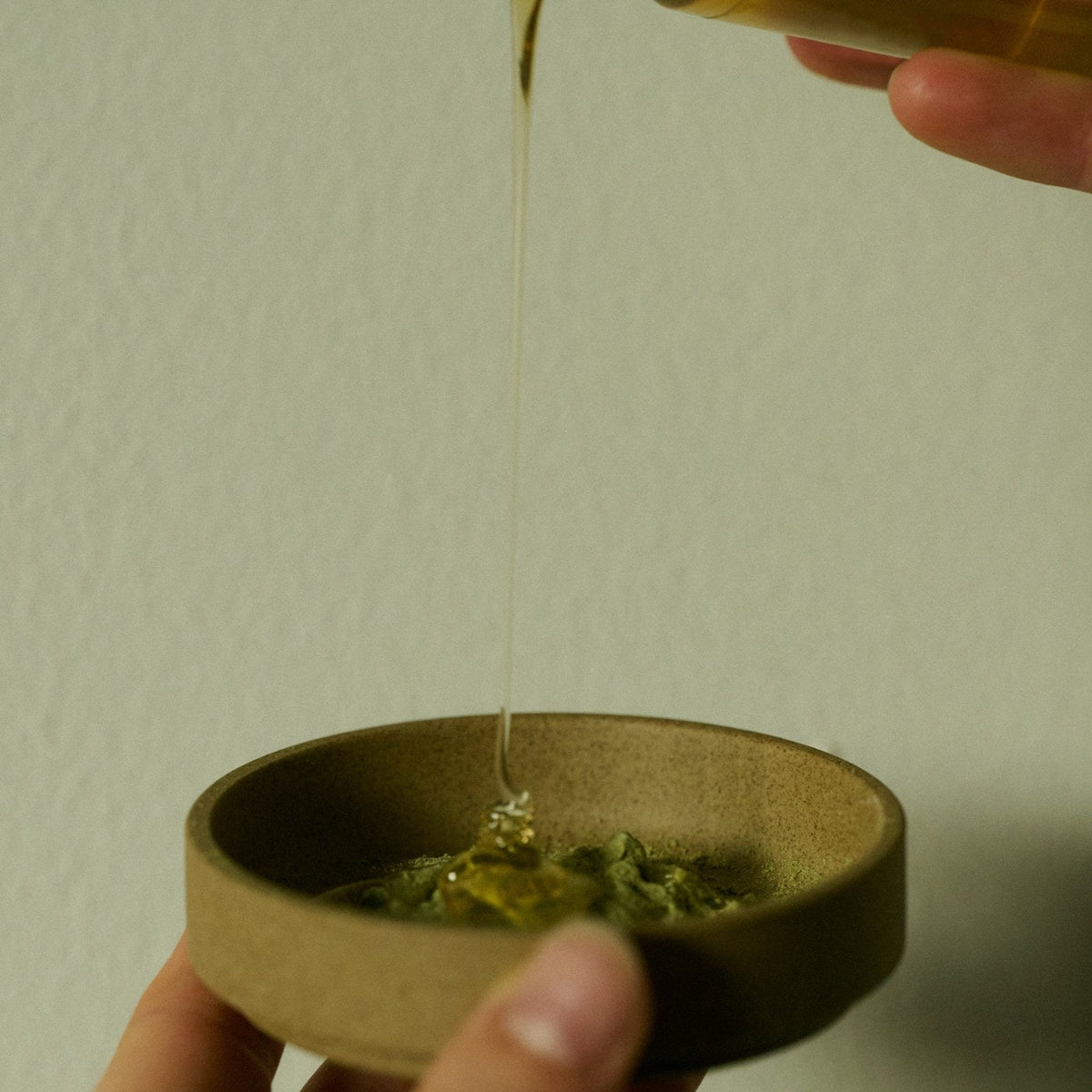
Most of what you want to remove from your face in the evening is fatty. Think of foundation, mascara, SPF and the sebum your skin makes during the day. Oil dissolves oil. When you massage a cleansing oil over your face, all of that loosens without you having to scrub.
A water-based cleanser works in a different way. It lifts dirt and sweat with mild cleansing agents, which it does well. Long-lasting makeup and a layer of SPF are harder for it. Then you often need two or three rounds, or you start rubbing. A cleansing oil takes care of the fatty part first, so your second step can be short and mild.
Our oil cleanses without leaving the skin dry or tight. For many people that is the biggest difference they notice: the skin feels clean and comfortable, not stripped.
Can you use a cleansing oil on oily skin?
Yes. This is the question I get asked most. It seems logical to keep oil away from oily skin, but the opposite is often true. If you wash oily skin very thoroughly with strong cleansers, it can feel dry and tight, while it still shines again a few hours later. You can read more about that in my blog Is sebum good or bad for your skin?
A cleansing oil dissolves excess sebum together with your makeup and SPF. Jojoba oil, one of the two main oils in our remover, softens the skin and helps keep its natural oils balanced without feeling heavy. What matters most is that you remove the oil properly and follow with a cleanser. Then nothing stays behind. For more tips, read our page on oily skin care.
Step by step: how do you use a cleansing oil?
- Start with dry hands and a dry face. Oil works best on dry skin. On wet skin it slides off before it can dissolve anything.
- Take a small amount and warm it briefly between your fingertips.
- Start with your eyes. Close them and massage the oil gently over your eyelids and lashes. Give waterproof mascara a few seconds. In my guide to the natural eye makeup remover I explain this step in detail.
- Massage the rest of your face with small circles: forehead, nose, cheeks and chin. Take your time on the areas where you wear makeup or SPF.
- Remove the oil. Rinse with lukewarm water or soak a soft cloth in warm water, wring it out, press it on your face for a moment and wipe the oil away.
- Wash your face with a mild cleanser on damp skin. Rinse with lukewarm water and pat your face dry.
- Continue with your toner and night care.
Good to know: our cleansing oil contains no emulsifier. So it does not turn milky when you add water, as some cleansing oils do. That is why a warm, damp cloth and a cleanser afterwards work best.
Cleansing oil or micellar water: what is the difference?
Micellar water is water with mild cleansing agents. You put it on a cotton pad and wipe your face with it, often without rinsing. That is quick and easy for light makeup.
With waterproof mascara or a layer of SPF, many people need several cotton pads and quite a bit of wiping. A cleansing oil works by massaging instead of wiping. You loosen the makeup with your fingertips and then remove everything in one go. Followed by a cleanser, there is nothing left on your skin. If you wear makeup or SPF every day, the combination of oil and cleanser is usually gentler than a stack of cotton pads.
Who is a cleansing oil for?
- For anyone who wears makeup or SPF during the day.
- For dry skin that feels tight after washing.
- For oily or combination skin that wants a thorough but mild cleanse.
- For sensitive skin that doesn't like rubbing. If you are trying a new product, test it on a small patch of skin first.
Which Abloom products do you use?
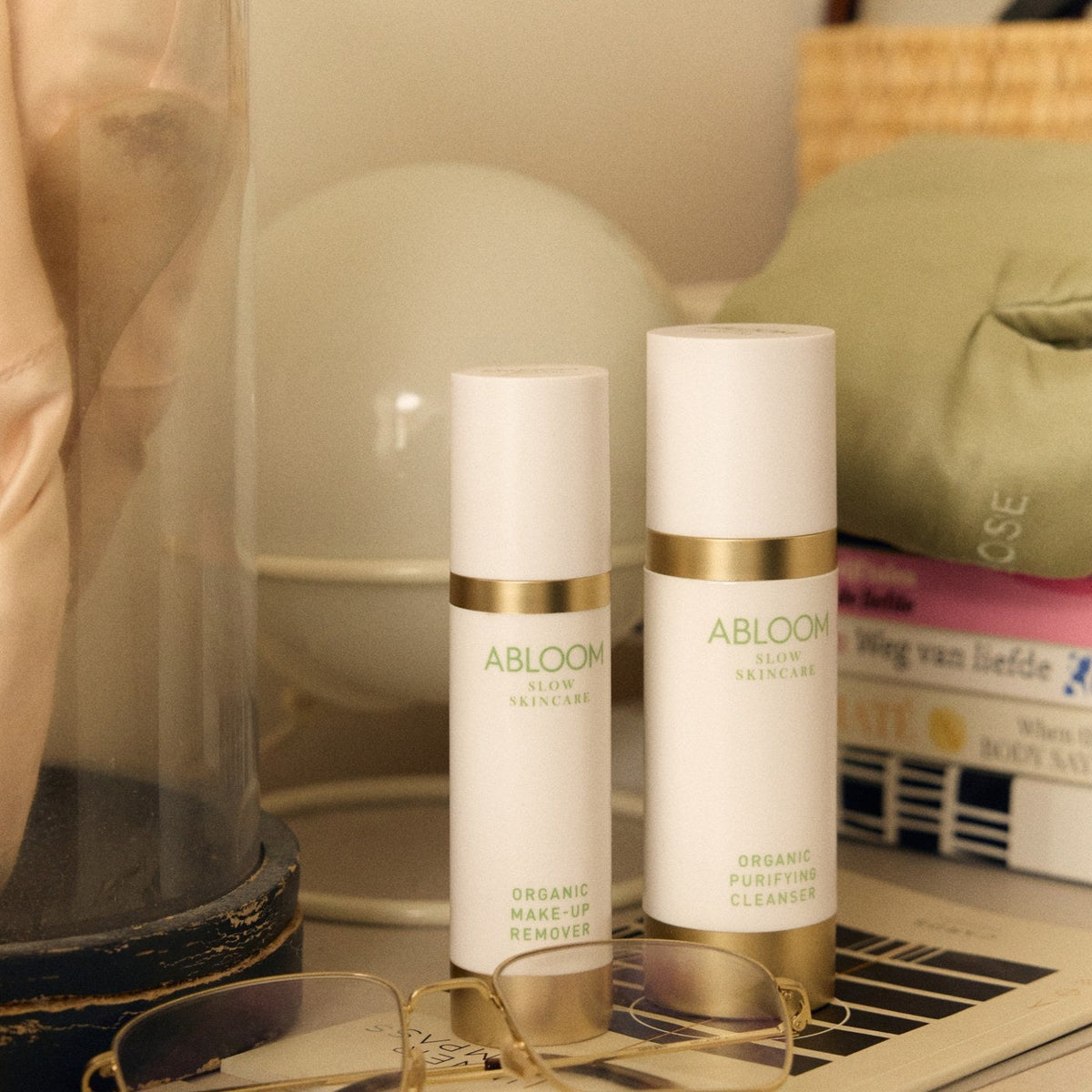
Organic Make Up Remover: our cleansing oil. A soft oil cleanser of sweet almond oil and jojoba oil with plant extracts such as lavender, chamomile and marshmallow root. It contains 17 ingredients and no water. It dissolves eye makeup and SPF, also waterproof makeup, without the need to rub, and it is a gentle first step for double cleansing in the evening.
Organic Purifying Cleanser: your second step. A soft, creamy cleanser with aloe vera instead of water, glycerin and coconut, olive and jojoba oil. It removes dirt, excess sebum and face makeup without drying out your skin and is suitable for all skin types, including sensitive skin. The cleanser is not meant for eye makeup; that is what the oil is for.
Cleansing with oil first and then a cleanser is called double cleansing. On our page about double cleansing you can read more about it.
How often do you use a cleansing oil?
Use the oil in the evening, on the days you have worn makeup or SPF. In the morning your skin is not wearing makeup yet, so the Purifying Cleanser on its own is enough. On a day without makeup or SPF, you can skip the oil in the evening too.
Not sure what your skin needs? Take our skincare test.
In short
- Oil dissolves makeup, SPF and excess sebum without drying out your skin.
- A cleansing oil also suits oily skin, as long as you remove it properly.
- Use it on dry skin, remove it with a warm, damp cloth and follow with a mild cleanser.
- In the morning, a cleanser on its own is enough.
Read also
- How to remove waterproof mascara: gently, with oil and without rubbing
- How to remove party makeup gently, without rubbing
- In what order do I use my skincare products?
Love,
Barbara Baars
Skin Specialist
Frequently asked questions
Can I use a cleansing oil if I have oily skin?
Do I need to wash my face after a cleansing oil?
What is the difference between a cleansing oil and micellar water?
Can I use a cleansing oil in the morning?

About the author
More about Barbara BaarsFor combination skin
Products for your skin



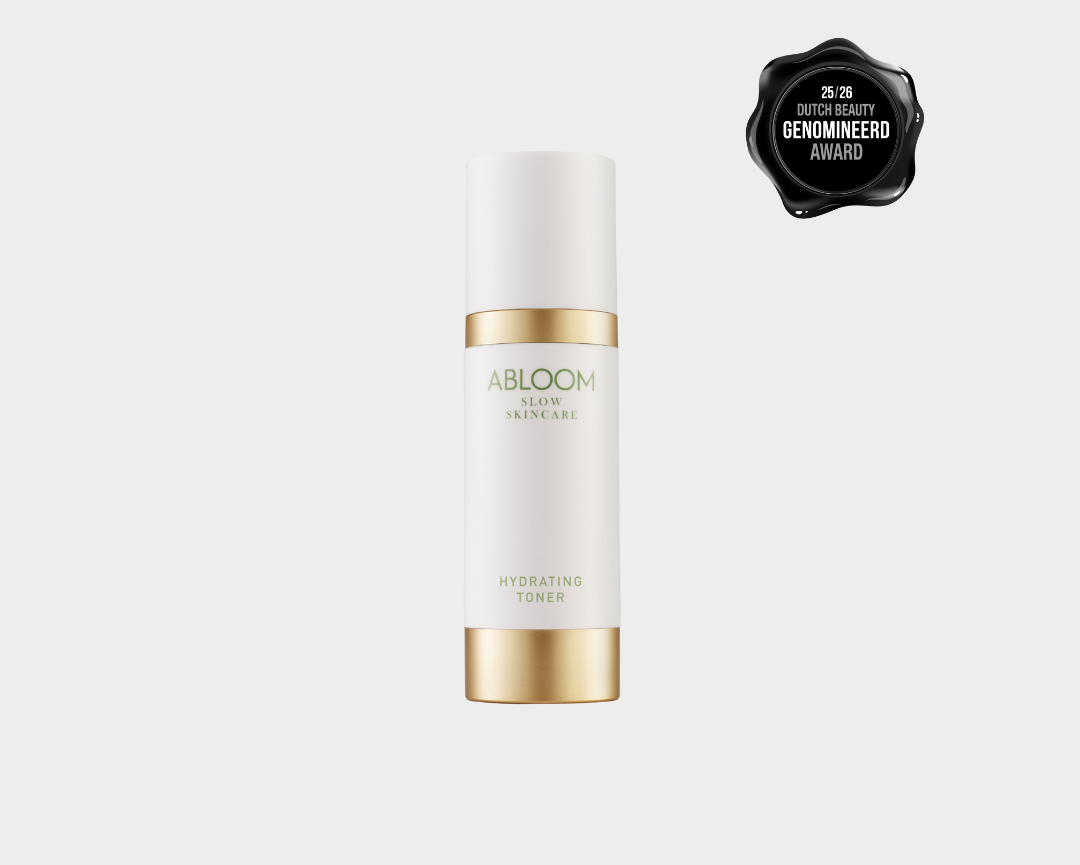

Gives thirsty skin a moisture boost and takes the tightness away.
Not sure what your skin needs?
Take the free skin test and find the routine that suits your skin.