
The Science Behind Cold-Processed Botanical Ingredients

Why heat what nature gave us so beautifully?
Did you know we first started cooking to save time and energy? Long before fire became part of daily life, humans ate their food raw. That took real effort: raw food was often tough, harder to chew and to digest. By cutting, pounding, and eventually cooking, food became softer, and the body could absorb nutrients more easily. A clever discovery.
But there’s another side to it. Heating destroys part of the natural enzymatic activity. And that’s exactly the principle we find so interesting when it comes to skincare.
Why would you heat botanical ingredients?
With cosmetic ingredients, heating might seem logical. Warmth helps reduce micro-organisms and makes production simpler. But intense heat has a downside: some of the most valuable active compounds are thermolabile, meaning they are sensitive to heat and prone to breaking down.
Think of certain vitamins, enzymes, polyphenols, and carotenoids. Plant oils, including essential oils, are also prone to oxidation when exposed to a lot of heat. You can picture oxidation a little like iron rusting: an ageing process that slowly makes an oil less potent.
Even pasteurisation, where ingredients are typically heated to around 70 to 75°C, can affect the activity of certain natural compounds. In short: how carefully you handle botanical ingredients partly determines how much of their natural properties survive.
This is also exactly why we deliberately choose living, plant-based ingredients over inert raw materials such as mineral oil. A plant has something to give: vitamins, antioxidants, and plant enzymes. But you have to know how to preserve that power.
Cold or lukewarm processing: the Abloom approach
At Abloom, we take a different route. Our raw materials are processed cold or lukewarm. We never work above roughly body temperature, keeping to a maximum of 36 °C.
With cold processing, the temperature isn’t raised at all. You see this in certain macerations, where plants gently release their valuable compounds.
With lukewarm processing, a little warmth can actually be functional. Some plants only release their components optimally at a mild temperature. So it’s not about being as cold as possible but as careful as possible.
And yes, you want to keep unwanted micro-organisms in check. But that doesn’t automatically require high temperatures. By working carefully, using suitable natural preservation, and protecting products well from air and light, you keep the quality of the ingredients intact.
What that means for your skin
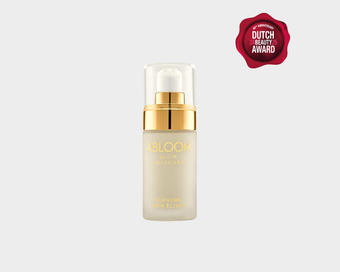
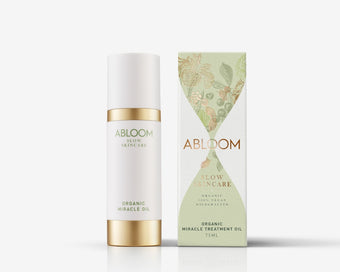
For us, that’s the essence of natural skincare: doing no more than necessary and, above all, preserving what nature gives us. You’ll find it back in our products. The cold-pressed oils in our Miracle Oil and Supreme Skin Elixir retain as much of their original plant power as possible. And the plant enzymes in our enzyme peeling do their work precisely because they haven’t been destroyed by heat.
Curious how powerful plants can be? Read more about the gemmo extracts we use: buds and young plant tissue, harvested at their most vital moment.
So why heat precious botanical ingredients when preserving their natural power as beautifully as possible is exactly the point?
Barbara Baars, skin specialist at Abloom